Training
We provide a range of in-person and online training solutions from individual travel safety, security and first aid, to organisational security and crisis management. Click on each course for more details, or complete the contact form, and we’ll get back to you within 24 hours.
If you have a specific training need that isn't covered below, do get in touch - we frequently work with clients to create bespoke training packages.
The one-day TSS course is intended for those travelling to low-medium risk urban and semi-rural environments and provides participants with the key considerations for keeping themselves safe and secure while conducting their work.
Using a mix of delivery techniques, a typical course will cover the following topics:
- The Operating Environment
- Pre-Departure Planning
- Accommodation
- Documentation & Equipment
- Communications
- Travel Health
- Airports and Local Transport
- Room Security
- Street Crime
- Crowds
- Terrorism
- Road Travel
How many participants can attend? Each course is designed for up to 12 participants to ensure effective levels of interaction.
Where does it take place? The training can be delivered online as a facilitator-led course or delivered in-person at a suitable venue of the client’s choosing.
What will each participant receive upon completion? Participants will receive a certificate of attendance and comprehensive aide memoire.
When will participants have to attend a refresher? It is recommended that participants refresh this training every 3 years to ensure they remain competent and confident.
This 2-day course expands on the one-day TSS course, and includes a day of ‘First Aid in the Field’ training with a focus on the provision of care for physical injuries in locations where emergency healthcare may not be immediately available. It is primarily intended for those travelling to medium risk environments. In addition to the Tier 1 TSS course content, topics include:
- Scene Management and casualty communication
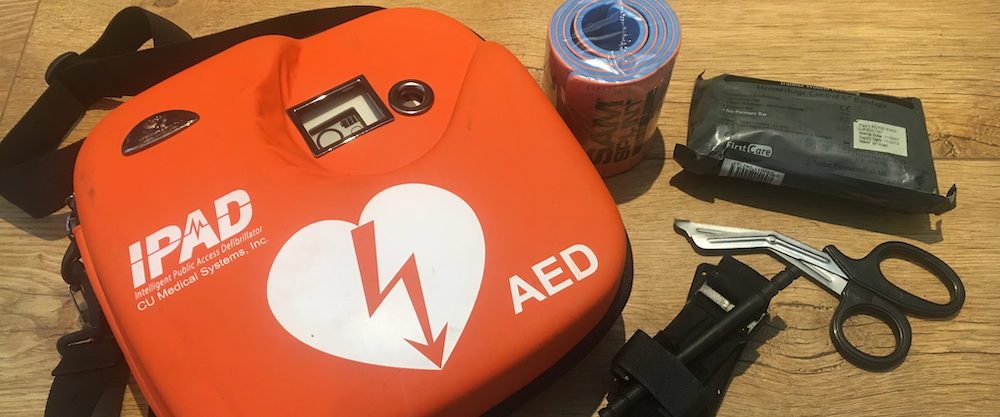
- Primary Survey (inc. CPR with and without AED)
- Safe Airway Positions
- Choking
- Dealing with Shock
- Secondary Survey (identifying other injuries)
- Bleeding – minor and major
- Breaks & Fractures
- Burns
How many participants can attend? A maximum of 12 participants on each course is maintained to ensure effective levels of interaction. Where qualifications are issued, first aid regulations require a maximum instructor/participant ratio of 1:12.
Where does it take place? The training is classroom-based and will typically be conducted in client offices or another suitable venue of their choosing.
What will each participant receive upon completion? Participants will receive a certificate of attendance and comprehensive aide memoire. If the option to provide qualifications is adopted, participants will also receive a Level 3 (RQF) First Aid qualification in ‘Emergency First Aid at Work’.
When will participants have to attend a refresher? It is recommended that participants refresh this training every 3 years to ensure they remain competent and confident. First aid qualifications expire after 3 years.
This 3-day course provides a cost-effective solution for those travelling to higher risk environments whereupon attendance on a residential 'Hostile Environment Awareness Training' (HEAT) course is deemed unnecessary or undesirable. The programme aims to offer a comprehensive look at key areas of security, safety, first aid and travel health and which are essential to those travelling to and within austere and complex environments.
The classroom-based course is delivered through discussion, dynamic group exercises, and demonstrations using a variety of learning and facilitation methods. It expands on many of the issues discussed during the Tier 1 and 2 courses, but with additional content relevant to working in higher risk locations.
In addition to the Tier 1 and 2 course content, key topics on day 3 of this course include:
- Dealing with aggression (including sexual violence)
- Stress and personal resilience
- Firearms awareness (including reaction to gunfire)
- Awareness of explosive devices (including reaction to blasts)
- Abduction and illegal detention
How many participants can attend? A maximum of 12 participants on each course is maintained to ensure effective levels of interaction. Where qualifications are issued, first aid regulations require a maximum instructor/participant ratio of 1:12.
Where does it take place? The training is classroom-based and will typically be conducted in client offices or another suitable venue of their choosing.
What will each participant receive upon completion? Participants will receive a certificate of attendance and comprehensive aide memoire. If the option to provide qualifications is adopted, participants will also receive a Level 3 (RQF) First Aid qualification in ‘Emergency First Aid at Work’.
When will participants have to attend a refresher? It is recommended that participants refresh this training every 3 years to ensure they remain competent and confident. First aid qualifications expire after 3 years.
This one day course is intended for those travelling to field environments where the provision of professional, emergency medical assistance may be limited.
Delivered as a standalone course or as part of our 3-Day Resilient Traveller Programme, the training covers the following topics:
- Scene Management and casualty communication
- Primary Survey (inc. CPR with and without AED)
- Safe Airway Positions
- Dealing with Shock
- Secondary Survey (identifying other injuries)
- Bleeding – minor and major
- Breaks & Fractures
- Burns
How many participants can attend? A maximum of 12 participants on each course is maintained to ensure effective levels of interaction. Where qualifications are issued, first aid regulations require a maximum instructor/participant ratio of 1:12.
Where does it take place? The training is classroom-based and will typically be conducted in client offices or another suitable venue of their choosing.
What will each participant receive upon completion? Participants will receive a certificate of attendance and comprehensive aide memoire. If the option to provide qualifications is adopted, participants will also receive a Level 3 (RQF) First Aid qualification in ‘Emergency First Aid at Work’.
When will participants have to attend a refresher? It is recommended that participants refresh this training every 3 years to ensure they remain competent and confident. First aid qualifications expire after 3 years.
Intended primarily for office based staff, the 3 day First Aid at Work (FAW) course provides participants with a UK Level 3 qualification on the Regulated Qualifications Framework (RQF) that lasts for 3 years. The course meets the requirements expected of UK employers in the provision of appropriate workplace first aid training.
Course content includes:
- Responsibilities of a First Aider
- Scene Assessment & Primary Survey (inc. CPR and Defibrillator)
- Choking
- Secondary Survey
- Minor & Major Bleeding
- Shock
- Burns (inc. specialist burns)
- Breaks & Fractures
- Sprains & Strains
- Head & Spinal Injuries
- Chest & Abdominal Injuries
- Eye injuries
- Poisoning
- Anaphylaxis
- Heart Attack
- Stroke
- Diabetes
- Asthma
- Epilepsy
How many participants can attend? A maximum of 12 participants on each course is maintained to ensure effective levels of interaction. First aid regulations require a maximum instructor/participant ratio of 1:12.
Where does it take place? The training is classroom-based and will typically be conducted in client offices or another suitable venue of their choosing.
What will each participant receive upon completion? Participants will receive a certificate of attendance, a comprehensive aide memoire, and a Level 3 (RQF) First Aid qualification and certificate in ‘First Aid at Work’.
When will participants have to attend a refresher? It is recommended that participants refresh this training every 3 years to ensure they remain competent and confident. First aid qualifications expire after 3 years.
Intended primarily for office based staff, the 1 day Emergency First Aid at Work (EFAW) course provides participants with a UK Level 3 qualification on the Regulated Qualifications Framework (RQF) that lasts for 3 years. The course meets the requirements expected of UK employers in the provision of appropriate workplace first aid training.
Course content includes:
- Responsibilities of a First Aider
- Scene Assessment & Primary Survey (inc. CPR and Defibrillator)
- Choking
- Secondary Survey
- Minor Injuries & Bleeding
- Shock
- Burns
How many participants can attend? A maximum of 12 participants on each course is maintained to ensure effective levels of interaction. First aid regulations require a maximum instructor/participant ratio of 1:12.
Where does it take place? The training is classroom-based and will typically be conducted in client offices or another suitable venue of their choosing.
What will each participant receive upon completion? Participants will receive a certificate of attendance, a comprehensive aide memoire, and a Level 3 (RQF) First Aid qualification and certificate in ‘Emergency First Aid at Work’.
When will participants have to attend a refresher? It is recommended that participants refresh this training every 3 years to ensure they remain competent and confident. First aid qualifications expire after 3 years.
This course is intended for staff that are assigned as 'Security Focal Points' (typically a part-time role given to a nominated employee in a sub-/national office) and covers key security management issues upon which they may be expected to advise and provide support.
The course is typically delivered online as a series of 8 facilitator-led sessions (each 1-2 hours) spread over a period of weeks, making it very accessible to a geographically dispersed workforce. The course can also be delivered in-person if required.
The course can be tailored to suit the needs of the client, although a typical course would cover the following topics:
- What is Security Risk Management?
- Assessing Security Risks
- Planning for Office Security & Field Activities
- Incident Management & Reporting
- Contingency Planning
- Working with Partners
- Risk Tolerance & Diverse Profiles
- Budgeting
How many participants can attend? A maximum of 12 participants on each course is maintained to ensure effective levels of interaction.
Where does it take place? Training is typically delivered online, although the course can be delivered in-person at a venue of the client's choosing.
What will each participant receive upon completion? Participants will receive a certificate of attendance and comprehensive aide memoire.
When will participants have to attend a refresher? It is recommended that participants refresh this training every 3 years to ensure they remain competent and confident.
This 1-day course is intended for management staff at all levels and covers the key aspects of security management that organisations should exercise and demonstrate as part of their overall business strategy. It is particularly useful during the roll out of newly-drafted security policy frameworks as it provides managers with a common understanding and language model, thus improving the quality and speed of implementation.
The course covers the following topics:
- Definitions
- The purpose of Security Risk Management (SRM)
- Duty of Care & Negligence
- Roles & Responsibilities
- The function of policies, principles, plans and procedures
- Assessing and treating risk
- Understanding and defining risk appetite
- SRM strategies in programme design and implementation
- Incident Management & Reporting
- Overview of Crisis Management
How many participants can attend? A maximum of 12 participants on each course is maintained to ensure effective levels of interaction.
Where does it take place? The training can be delivered online as a facilitator-led session or classroom-based at a client's venue of their choosing.
What will each participant receive upon completion? Participants will receive a certificate of attendance and comprehensive aide memoire.
When will participants have to attend a refresher? It is recommended that participants refresh this training every 3 years to ensure they remain competent and confident.
VALENSIS offers two different forms of Crisis Management Training:
‘Teach and test’ is intended for organisations that are relatively new to Crisis Management planning and introduces staff to the core concepts, working through any plans and procedures that may already exist. The exact structure of this can vary depending upon pre-existing knowledge and prior Crisis Management provision.
The ‘teaching’ is then followed by small, short duration simulation (the ‘test’) to practice many of the key management challenges that exist during a crisis.
The final part of the training allows for discussion, feedback, and the development of actionable plans for enhancing Crisis Management planning in the organisation.
Simulations are more immersive and intended to place established CMTs in a realistic and relatable scenario to test pre-agreed elements of an organisation’s crisis management plans.
Simulations last for 1-2 days (depending upon requirements) and are typically run in a mix of physical office and virtual environments to reflect the likely coordination of a real crisis.
The scenario will be coordinated by a lead facilitator to deliver an array of realistic challenges for the CMT to manage. The simulation will be followed by a full written report and recommendations.
How many participants can attend? A maximum of 12 participants on each course is maintained to ensure effective levels of interaction.
Where does it take place? The training can be delivered in an entirely virtual environment, entirely classroom-based, or a blend of the two depending upon the needs of the client.
What will each participant receive upon completion? Participants will receive a certificate of attendance.
When will participants have to attend a refresher? It is recommended that Crisis Management training is repeated at least every 3 years to ensure the CMT remains current and competent.
This 1-day workshop is intended for anyone working in environments that bring a high risk of kidnap. It explores the different forms of kidnap, ways to minimise the probability of falling victim to a kidnap, actions to take in the event of capture, and managing the short and long-term consequences of captivity. The workshop covers the following topics:
- What is Kidnapping?
- How are kidnaps conducted and how can we avoid it?
- The point of capture
- Managing the physical and psychological impact of enforced captivity
- Other stakeholders
- The end game and returning from captivity
How many participants can attend? A maximum of 12 participants on each workshop is maintained to ensure effective levels of interaction.
Where does it take place? The workshop can be delivered online as a facilitator-led session or classroom-based in a venue of the client's choosing.
What will each participant receive upon completion? Participants will receive a certificate of attendance and comprehensive aide memoire.
When will participants have to attend a refresher? It is recommended that participants refresh this training every 3 years to ensure they remain competent and confident.
This 1-day classroom-based workshop is intended for anyone, but with a particular focus on those conducting international travel.
Using a range of facilitation techniques (including plenary discussion, group work, desk-based exercises and scenarios, and visual media), the workshop aims to cover a broad range of topics, including:
- Definitions and different forms of Sexual Violence (SV)
- Global statistics and trends
- The concept of consent
- Understanding context, culture, social norms, and how this relates to ‘Personal Protected Characteristics’
- Individual approaches to SV – avoiding, responding and reacting
- Informal and immediate support to survivors of SV – a survivor centred approach
- Professional support options available to survivors of SV
- Incident reporting (inc. organisational processes, importance of confidentiality, and the challenges associated with reporting to other actors such as local police)
- Further resources
Sexual Violence is an issue that can affect anyone, no matter their gender identity, sexual orientation, nationality, ethnicity or any other personal characteristic. In this regard, we encourage as diverse an audience as possible in the workshop.
How many participants can attend? A maximum of 12 participants on each course is maintained to ensure effective levels of interaction.
Where does it take place? The training is classroom-based and will typically be conducted in client offices or another suitable venue of their choosing.
What will each participant receive upon completion? Participants will receive a certificate of attendance and comprehensive aide memoire.
When will participants have to attend a refresher? It is recommended that participants refresh this training every 3 years to ensure they remain competent and confident.
We frequently work with clients to develop bespoke training solutions to suit a particular need. This can range from simple adaptations to our existing courses, to entirely new training packages.
Equally, we are well versed in supporting the development of induction and training materials for internal use.
If you have specific training needs, we'd welcome a discussion with you - get in touch using the Contact page and we'll get back to you within 24 hours.